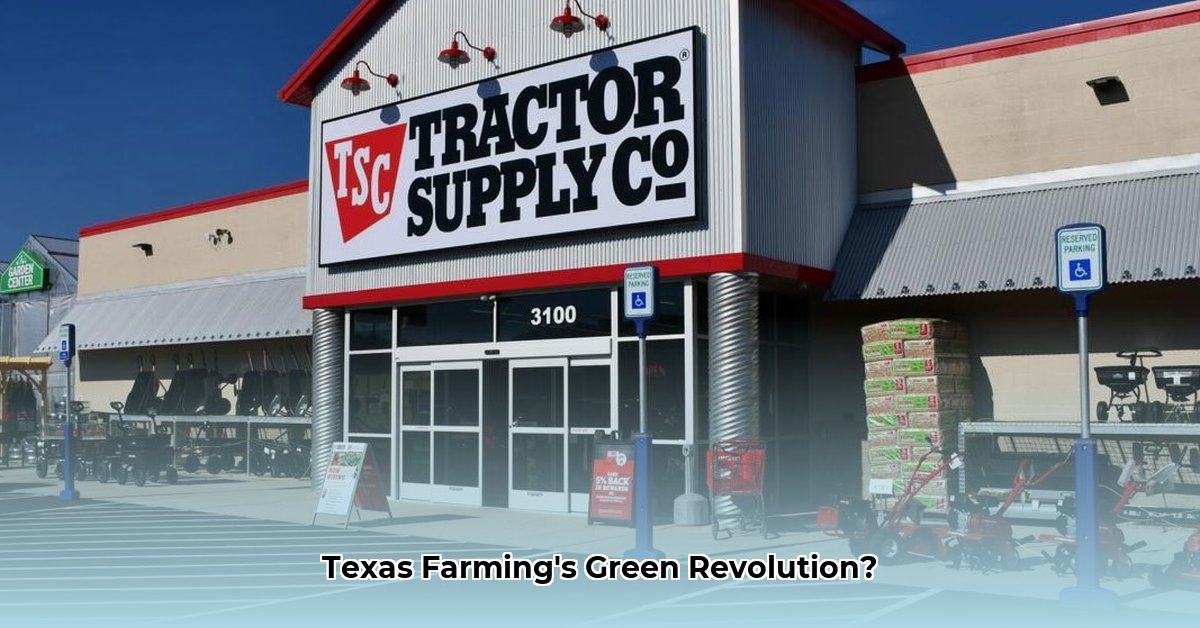
Tractor Supply Bay City: A Hub for Sustainable Agriculture in the Texas Coastal Bend
Tractor Supply's Bay City, Texas location, situated at 4715 7th Street, serves as a vital resource for local farmers and gardeners. Its extended hours—8 am to 9 pm—cater to the demanding schedules of the agricultural community. But beyond convenience, how significantly does this store contribute to sustainable farming practices in the region? This case study explores that question. For a similar example, check out the Brenham store.
Supporting Local, Sustainable Agriculture: Assessing the Impact
The Bay City Tractor Supply offers a wide product range, directly supporting sustainable agriculture. High-quality animal feed promotes healthy livestock and efficient feed utilization, minimizing environmental impact. The comprehensive selection of gardening supplies empowers residents to grow their own food, reducing reliance on large-scale, distant producers. This localized food production reduces transportation emissions and strengthens community resilience. However, a comprehensive evaluation requires more than qualitative observations; quantifiable data is crucial. What percentage of sales comprises sustainable products? What energy-saving measures are implemented? A data-driven approach is necessary to fully understand the store's contribution.
How can we better quantify Tractor Supply's impact on local sustainability? This is a key question driving further investigation.
The Need for Data-Driven Insights: Addressing Knowledge Gaps
The absence of detailed sales data currently hinders a complete assessment of Tractor Supply’s contribution to sustainable agriculture in Bay City. While anecdotal evidence points to positive community impact, concrete data is needed to validate and quantify these observations. Several key data points are missing to paint a complete picture:
Detailed Sales Data: Analysis of sales figures for specific sustainable products (organic seeds, eco-friendly fertilizers, etc.) would provide a quantifiable measure of the store’s contribution. This analysis should consider seasonal variations and market trends.
Customer Surveys: Gathering customer feedback on purchasing habits and preferences related to sustainable products would inform future inventory decisions and reveal consumer demand for environmentally friendly options.
Supply Chain Transparency: Assessing the store's supply chain—from sourcing to transportation and packaging—is crucial for evaluating its overall environmental footprint. Identifying opportunities for increased sustainability within the supply chain would benefit both the store and the community.
A Roadmap for Enhanced Sustainability: Collaborative Action
The following framework outlines a collaborative approach to improve sustainability at the Bay City Tractor Supply. Specific goals should be adapted to local resources and context.
Comprehensive Sustainability Audit (Tractor Supply): Conduct a thorough audit of the Bay City store, focusing on energy consumption, waste management, and supply chain sustainability. This baseline assessment will inform future improvements.
Community Engagement (Tractor Supply & Local Farmers): Organize workshops on sustainable farming practices and facilitate open communication between the store and local farmers to understand their needs and preferences. This ensures the store’s offerings align with community requirements.
Partnership with Local Government: Collaborate with local authorities to promote sustainable agriculture initiatives, potentially securing grants or tax incentives to support these efforts. This collaborative approach fosters a supportive environment for sustainable practices.
Public Reporting & Transparency: Regularly report on sustainability initiatives and progress to relevant stakeholders. This fosters accountability and community trust.
Measuring Sustainability Impact: A Multifaceted Approach
This section provides a framework for quantifying the sustainability impact of a rural tractor supply store, using illustrative examples.
Assessing Environmental Impact
A thorough environmental assessment will entail:
- Product Sourcing: Evaluate the sustainability of fertilizers, seeds, and other products through lifecycle assessments (LCAs).
- Energy Consumption: Monitor energy use and explore renewable energy options. Compare energy consumption to industry benchmarks.
- Waste Management: Track waste generation and implement robust recycling and composting programs.
- Water Usage: Monitor water consumption and implement water conservation strategies.
Assessing Social Responsibility
Beyond environmental considerations, measuring the social impact includes:
- Community Engagement: Assess the store's community involvement and support for local farmers through surveys and interviews.
- Employee Practices: Evaluate employee compensation, training, and overall work environment.
- Accessibility: Ensure the store is accessible to all members of the community, considering factors such as transportation and infrastructure.
- Promotion of Sustainable Practices: Gauge how effectively the store promotes and sells products that support environmentally responsible farming.
Data Collection and Analysis: A Practical Guide
- Establish Baseline Metrics: Determine initial levels of energy use, waste generation, and water consumption.
- Implement a Data Tracking System: Use tools to monitor data points such as sales of sustainable products, energy usage, and waste management.
- Analyze Sales Data: Focus specifically on sales figures for environmentally friendly products to understand consumer purchasing patterns.
- Conduct Interviews and Surveys: Gather qualitative data from staff, customers, and local stakeholders.
- Set Targets and Measure Progress: Establish measurable goals for reducing environmental impact and enhancing social responsibility. Regularly monitor progress.
Dr. Emily Carter, Professor of Agricultural Sustainability, Texas A&M University: "A data-driven approach is absolutely critical to assessing the true impact of businesses like Tractor Supply on sustainable agriculture. Combining quantitative data with qualitative feedback from the community paints a complete picture of their contribution, allowing for targeted improvements and continuous progress."
Conclusion: A Collaborative Path to Sustainable Agriculture
The path toward a sustainable agricultural ecosystem in Bay City requires a collaborative effort between Tractor Supply, local farmers, government agencies, and residents. By implementing the framework outlined above, the community can work together to create a thriving and environmentally responsible agricultural landscape. Continued research and community engagement are vital to adapting strategies and ensuring long-term success. This collaborative approach unlocks the potential for a sustainable and prosperous future for Bay City.
Tractor Supply Bay City Texas
Content about tractor supply bay city texas (Auto-generated fallback due to API error).